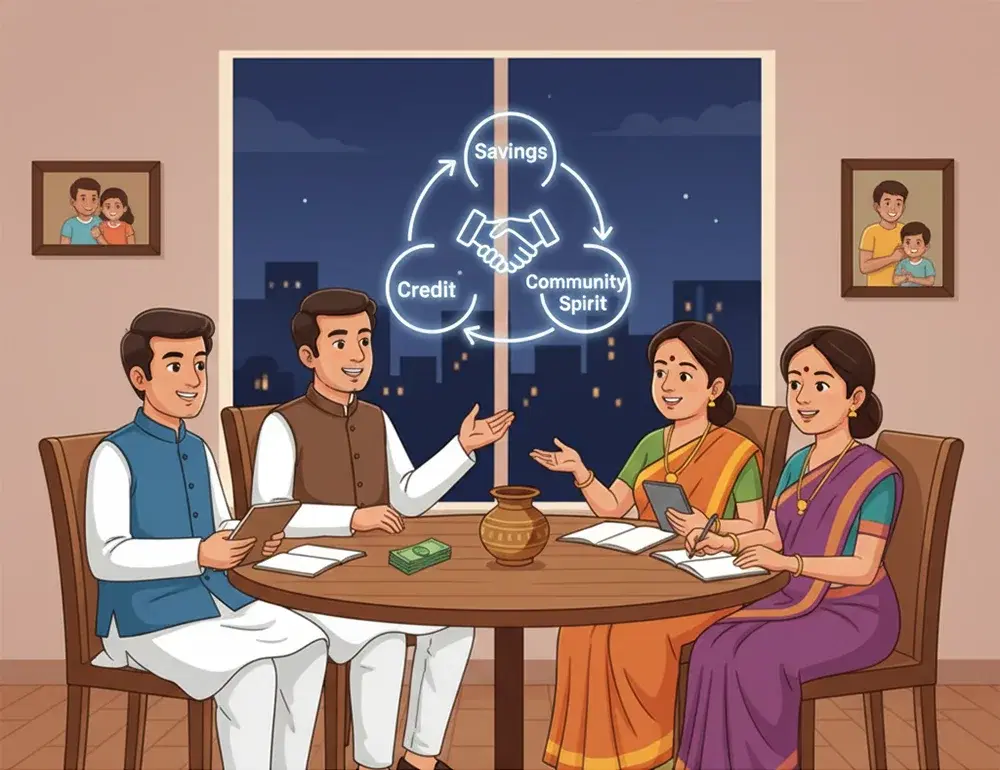
The Timeless Blend of Savings, Credit, and Community Spirit
Every Indian family has a story of saving; mothers setting aside a little from household budgets, shopkeepers pooling money in their community, neighbors helping each other in times of need. Out of this culture of trust and togetherness, the Chit Fund was born more than a century ago.

DICHIT
Editorial Team
A Tradition Born from Everyday Needs
Every Indian family has a story of saving; mothers setting aside a little from household budgets, shopkeepers pooling money in their community, neighbors helping each other in times of need. Out of this culture of trust and togetherness, the Chit Fund was born more than a century ago.
At its simplest, a group of people came together, contributed a fixed sum every month, and the pooled amount was given to one member in turn. It was savings and borrowing combined, wrapped in community spirit. One person could fulfill their urgent need today, while the next month someone else could receive the same support to build their dream. It was more than finance, it was about people winning together, one after another.
Structure that Fits Every Life
What made chit funds extraordinary was their flexibility. For one family, it became a disciplined way to save for weddings, education, or emergencies. For a trader, it became a source of working capital without running to moneylenders. Everyone contributed, everyone benefited and the cycle kept the community moving forward.
From Streets to Statute Books
As chit funds grew, they became a backbone of financial life in South India and later across the country. By the late 20th century, their popularity was so vast that the Government of India gave them a legal framework under the Chit Funds Act, 1982. This shifted chit funds from being just informal neighborhood circles to a recognized, regulated financial instrument.
A Model Indians Trust
Even today, millions of Indians rely on chit funds. Salaried professionals, homemakers, entrepreneurs, small shopkeepers and all find value in this simple model. Unlike speculative markets, chit funds carry the comfort of predictability. You know what you are contributing, you know what you will receive, and you trust the group you are part of.
In a country where trust is currency, chit funds remain one of the most time-tested savings and borrowing systems.
Today’s Acceptance and Importance
In 2025, chit funds are not a thing of the past, they are very much alive. From rural villages to bustling cities, people still participate in chit funds to build financial discipline, access emergency funds, or plan long-term goals. The estimated chit fund market in India is worth tens of thousands of crores, proving that this system still holds relevance.
For many, chit funds act as a parallel financial backbone and one that works alongside banks, mutual funds, and digital wallets. In fact, as technology integrates into this sector, the acceptance and importance of chit funds in society has only grown stronger.
Why This Chit Fund Still Works
Chit funds endure because they are human-first finance. They are not just about money; they are about people coming together, sharing responsibility, and supporting each other’s goals. In a fast-paced world where financial products often feel complex, chit funds remain refreshingly simple.